
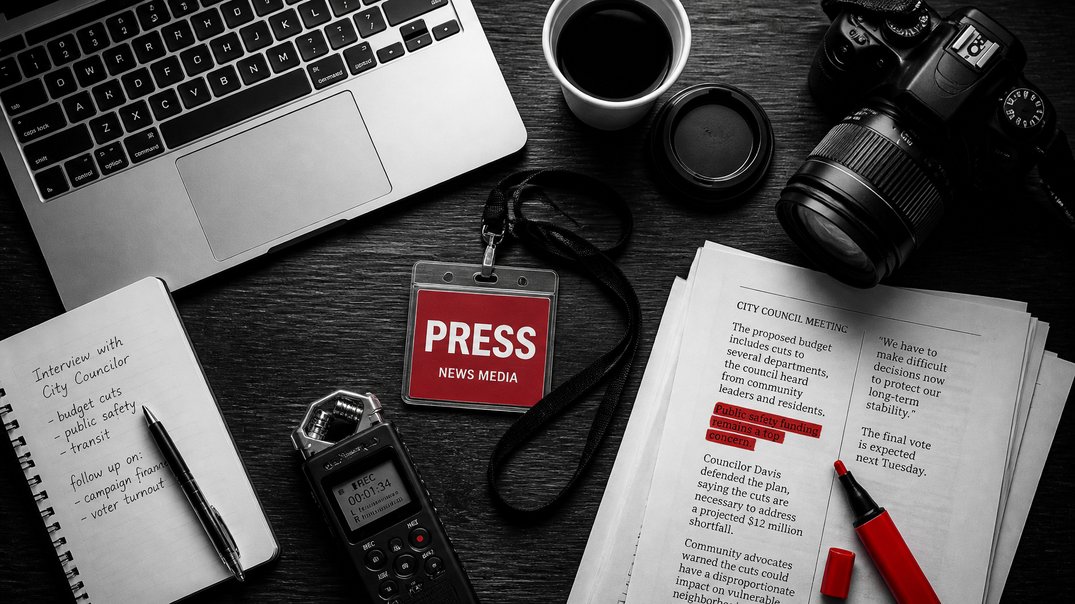
A distribution report can look impressive: hundreds of pickup pages, a reach number in the millions, a summary that reads like a success story. Almost none of that tells you whether the release actually did anything for AI visibility, because the number that matters isn’t how many pages carried the release. It’s how many independent journalists decided the story was worth writing about on their own.
That distinction, between syndicated pickup and genuine media pickup, is the one most PR reporting glosses over. It’s also the one that determines whether a company’s news ever shows up in an AI-generated answer.
This article breaks down what the research says about that gap, why it exists, and what a company can actually do to close it.
The Gap Between Wire Distribution And Media Pickup
Wire distribution and media pickup sound similar but function very differently once AI retrieval systems get involved.
What Counts As Real Media Pickup
Genuine pickup happens when a journalist or outlet writes their own article referencing a company’s news, using their own framing, sourcing, and often additional reporting. That article is a distinct, original piece of content published under the outlet’s own authority.
Why Syndicated Copies Don’t Count
A wire release that appears unchanged on 200 partner sites is not 200 instances of pickup. It’s one piece of content copied 200 times. AI retrieval systems tend to recognize this duplication and collapse it into a single low-priority source, or ignore it in favor of pages with more unique content. Research from Presenc AI found that a release generating 200 identical syndicated pages and zero original articles creates minimal AI citation value, while the same release generating five independent editorial pieces can produce several new high-authority citation sources within a couple of months.
What The Research Says About Pickup And AI Citation
Once you separate syndicated pickup from genuine pickup, the citation data lines up cleanly with what you’d expect.
Coverage Volume Predicts Citation Volume
Muck Rack’s Generative Pulse research, which analyzed more than 25 million links cited across ChatGPT, Claude, and Gemini, found earned media citations dwarfing press release citations by a wide margin across every industry studied. The pattern has held consistently since the research began tracking it in mid-2025. Wherever a company generated real journalistic coverage, AI citations tended to follow within weeks or months.
A Single Major Placement Can Outweigh Dozens Of Minor Ones
Crackle PR’s Q2 2026 AI Citation Benchmark found domain authority correlates with AI citation frequency at a fairly strong statistical rate, and noted that one placement in a top-tier outlet often generates more AI visibility than dozens of smaller hits combined. This matters for how a company should think about pickup goals. Ten mentions on unfamiliar blogs are worth far less than one article in a publication the models already trust.
How To Increase The Odds Of Genuine Pickup
Getting a journalist to write an original story instead of running the release verbatim is a different skill than writing a release that reads well. A few practices consistently improve the odds.
Give Journalists A Reason To Write Their Own Story
A release packed with quotable data, a clear news hook, and an angle a reporter hasn’t already covered gives a journalist something to build a story around rather than something to simply republish. Releases that read like finished articles, with nothing left for a reporter to add, tend to get run as is or skipped entirely.
Target Reporters Who Cover The Topic, Not Just The Category
Mass distribution to a category list is efficient but rarely produces original coverage, because most recipients never open a release addressed to a generic beat. A shorter, more targeted list of reporters who actively cover the specific topic tends to produce a lower pickup count and a higher rate of genuine, original articles.
Measuring What Actually Predicts AI Visibility
If media pickup is the real goal, the reporting a company reviews after each release should reflect that, rather than defaulting to the numbers a distribution service prints on its summary page.
Track Pickup Separately From Distribution Count
A useful report separates syndicated pickup pages from original articles, and lists the original articles individually with the outlet name attached. That’s a longer list to build, but it’s the one that actually predicts whether AI models will encounter and cite the coverage later.
Watch Which Outlets, Not Just How Many
Because AI citation research consistently shows outlet authority as the strongest predictor of citation likelihood, a report that names the outlets involved is more useful than one that only totals them. A single mention in a nationally recognized outlet is worth tracking and celebrating on its own, separate from the overall pickup count.
Frequently Asked Questions
What’s the difference between wire distribution and media pickup?
Wire distribution places identical release text on many partner sites at once. Media pickup happens when a journalist writes an original article about the news, using their own framing and sourcing.
Does a higher pickup count mean better AI visibility?
Not necessarily. A large number of syndicated, identical pickup pages contributes little to AI visibility, while a small number of original articles at reputable outlets tends to contribute much more.
How can a company improve its odds of earning original coverage?
Releases with a clear news hook, quotable data, and an underdeveloped angle give journalists a reason to write their own story rather than run the release as is. Targeting reporters who actively cover the topic also helps.
What should a company track after a release goes out?
Original articles at named outlets, tracked separately from total syndicated pickup, since that distinction is what predicts future AI citation more reliably than a total distribution count.
Distribution reports will likely keep leading with reach numbers, because reach numbers are easy to print and easy to sell against. But the research on AI citation is fairly clear: the release is the opening move, and the story a journalist chooses to write next is the one that actually determines whether an AI model ever mentions the company at all.