
Use a virtual mailbox with a U.S. street address, then choose whether each item is scanned, forwarded, or held. That gives you a steady U.S. address for banks, insurers, and online shopping while you live abroad, without asking family or friends to sort and ship your mail every month.
Why Expats Keep a U.S. Mailing Address
Leaving the country does not end your paperwork back home. Many people abroad still have U.S. bank accounts, retirement accounts, insurance policies, and tax obligations, and those institutions often send letters to the U.S. address on file. Some may not accept a foreign address at all, so ask each one what it requires. Before you move, make a list of the accounts that truly need a U.S. address. Banks, credit cards, investment firms, insurers, and tax professionals are good places to start.
A relative’s house can work as a stopgap, but it hands someone you love a permanent chore. A virtual mailbox keeps the job professional and puts you in control of what happens to every envelope.
How a U.S. Virtual Mailbox Works From Abroad
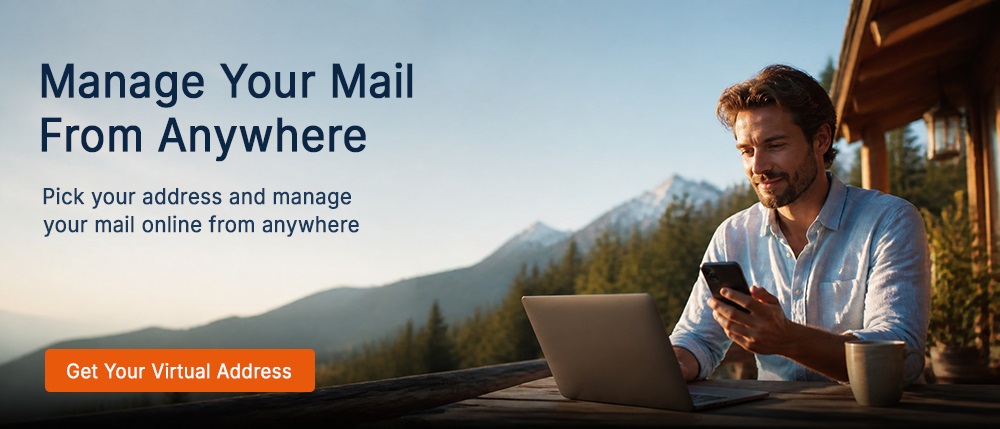
Your provider receives mail at a street address in the United States. You see each arrival in an online account and tell the provider what to do with it. Letters you only need to read can be scanned, and anything you need in hand can be forwarded. Some providers also let you set preferences, such as holding packages for a few days, so the service fits your habits instead of the other way around.
Setup starts with USPS Form 1583. The form has a country line for your home address, so people who live abroad can list where they actually live. It also requires two types of ID: one government-issued photo ID, such as a passport, and one document that confirms the address on the form. Ask your provider which documents it accepts for a home address outside the United States.
What to Gather Before You Apply
Preparation saves you a lot of back-and-forth across time zones. Have these items ready:
- A passport or another accepted government photo ID
- A document that confirms your home address, such as a lease or insurance policy
- A way to sign in front of your provider by live video, or in front of a notary
- The address where you want forwarded mail to go
Scan or photograph each document ahead of time, since the form calls for copies of your photo and address documents, and check that every name and address matches exactly.
The notary detail matters overseas. The form says a notary acknowledgment must come from a notary commissioned in a U.S. state, territory, possession, or the District of Columbia, so a local notary abroad may not qualify. The form also lets the provider witness your signature in real time by audio and video, which is often the easier route.
Forwarding Mail and Keeping Your Details Current
Most expats scan their letters and forward only what they truly need. The form says mail sent back through the postal system must carry new postage, so every forwarded envelope has a cost, and international shipping costs more than domestic. Ask your provider how it handles overseas forwarding and how it prices shipments.
Packages bring extra questions. Customs rules, duties, and delivery times differ by country, and some items are restricted, so check your destination’s rules before you ship valuables or electronics.
Expats tend to move more than they plan to. The form says you must file an updated application with your provider when information on it changes, so report new addresses promptly. This article is general information, not legal or tax advice, so confirm requirements for your situation. A little upkeep keeps your U.S. mail within reach from anywhere.
Expat Mail Forwarding FAQs
Can I Use a Virtual Mailbox if I Live Outside the United States?
Often yes. The USPS form includes a country line for your home address, but confirm your provider’s rules for foreign addresses and documents.
Can I Get Packages Forwarded Overseas?
Many providers offer international forwarding for a shipping fee. Customs rules and duties vary by country.
Do I Need to Tell My Provider if I Move to a New Country?
Yes. The USPS form says you must file an updated application with your provider when the information on it changes.