

There is a moment familiar to almost every small business owner: you search for your own category in your own town and find yourself buried beneath a national chain with a hundred locations, a franchise with a corporate SEO team, and a regional competitor that has been around since before you were born. The temptation is to conclude that visibility is a game rigged in favor of whoever has the bigger budget, and that the best a small business can do is pick up the scraps at the bottom of the results page.
That conclusion is both understandable and incorrect. Local visibility is one of the few arenas in modern marketing where small businesses hold genuine, structural advantages over larger competitors, provided they know how to use them. National brands are optimized for scale and consistency, which means they are often mediocre at the precise, contextual, community-specific presence that local audiences actually respond to. The playing field is not level, but it tilts in more directions than most small business owners realize.
Here is where the real opportunities sit.
Contents
Own Your Local Search Presence
For most small businesses with a physical location or a defined service area, local search is the single highest-leverage visibility channel available. When someone in your city searches for what you offer, appearing prominently in those results is worth more than almost any other marketing activity you could pursue, because the intent behind a local search is typically immediate and purchase-ready in a way that social media browsing or display advertising exposure never quite is.
The foundation of local search visibility is a fully optimized Google Business Profile. This means accurate and complete business information, a genuine and growing collection of customer reviews, regular posts that signal active management, high-quality photos that represent the business honestly, and responses to every review, positive or critical, that demonstrate engagement. National chains often treat their individual location profiles as an afterthought managed from a corporate office hundreds of miles away. A local business owner who treats theirs as a live asset and tends it consistently has a meaningful advantage that money alone cannot easily replicate.
Local SEO Beyond the Business Profile
Broader local SEO efforts reinforce and extend that foundation. Creating content on your website that is genuinely specific to your local market, mentioning neighborhoods, local landmarks, community events, and regional context that a national brand template would never include, sends signals to search engines that your business is authentically embedded in the geography it claims to serve. Citations in local business directories, links from community organizations and local publications, and consistent name, address, and phone number data across every platform your business appears on all contribute to a local authority profile that large competitors with distributed, inconsistent location data often struggle to match.
Leverage the Trust That Size Cannot Buy
Large brands spend enormous amounts of money trying to manufacture the feeling of personal relationship and community investment that small businesses generate naturally. They create mascots, run hyperlocal ad campaigns, sponsor community events under their corporate banner, and post carefully researched social content designed to sound like it came from a neighbor rather than a marketing department. It rarely works as well as the genuine article, and consumers generally know the difference.
The authentic community connection that a small business owner carries by virtue of actually living and working in the community they serve is a brand asset with no equivalent purchase price. It shows up in the way you remember a customer’s name, the way your business responds when something goes wrong, the way your social media presence reflects a real personality rather than a brand guidelines document, and the way your involvement in local organizations and causes feels like participation rather than sponsorship. These qualities build a quality of loyalty and word-of-mouth referral that no national campaign budget can reliably produce.
Reviews as a Local Competitive Weapon
In local markets, customer reviews function as a visibility and trust multiplier that disproportionately favors businesses willing to ask for them consistently. A small business with two hundred genuine, detailed five-star reviews can outrank and outperform a national competitor with a handful of generic ones, regardless of the budget disparity behind each operation. Building a systematic habit of requesting reviews from satisfied customers, making the process as frictionless as possible, and responding thoughtfully to every piece of feedback is one of the most cost-effective competitive strategies available to a local business.
Be Present Where Bigger Competitors Are Absent
National brands optimize for the channels that scale efficiently across hundreds of locations. They invest in national advertising, centralized social media management, and broad digital campaigns that serve the average of their entire footprint rather than the specific character of any individual market. That optimization creates predictable gaps at the local level where a nimble small business can establish a presence that larger competitors simply do not bother with.
Local community Facebook groups, neighborhood apps, regional business associations, chamber of commerce involvement, sponsorship of genuinely local events, and partnerships with other independent businesses in complementary categories all represent channels where the absence of corporate competition makes it easier to be heard. These are not glamorous marketing channels, but they are often the ones where local purchasing decisions are actually made, and showing up in them consistently creates a community visibility that no algorithmic campaign can replicate.
Earned Media Levels the Playing Field
One of the most overlooked local visibility tools for small businesses is earned media coverage in regional publications, local news outlets, and community-focused online platforms. A feature story in a local business journal, a mention in a regional lifestyle publication, or a quote in a community news piece does something that no paid advertisement achieves: it positions your business as part of the local conversation rather than an interruption of it.
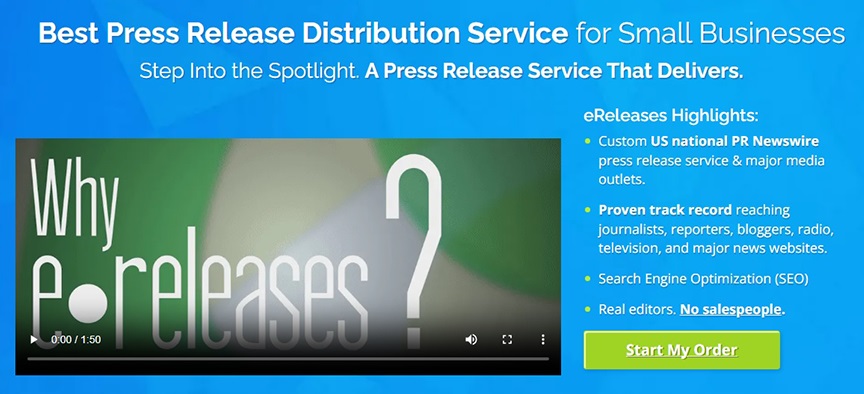
Local journalists actively seek small business stories that reflect community life, economic development, and the human interest angles that national brands rarely provide. A well-crafted press release about a genuine local development, whether that is an expansion, a community partnership, a milestone anniversary, or a response to a local trend, can generate the kind of coverage that establishes your business as a recognized community institution. Services like eReleases pair national wire distribution with targeted journalist outreach, ensuring that your announcement reaches both local reporters and the broader regional and industry media contacts who might pick up a story with wider appeal. For a small business competing against brands with corporate communications departments, that kind of infrastructure access is a meaningful equalizer.
Consistency Over Intensity
Perhaps the most durable competitive advantage a small business holds over a larger competitor in the local visibility game is the ability to be consistently, personally present over a long period of time. Large organizations cycle through marketing managers, rebrand periodically, shift strategy with each new quarterly plan, and produce a local presence that, however well-resourced, tends to feel intermittent and impersonal. A small business that shows up in the same places, with the same voice, in service of the same community relationships, year after year, builds a kind of ambient recognition that outlasts any individual campaign.
That consistency does not require a large budget. It requires intention, patience, and the understanding that local visibility is not a problem to be solved once but a relationship to be maintained continuously. The businesses that internalize that distinction tend to find that the gap between themselves and their larger competitors narrows more reliably than any single tactic ever managed to close it.