

When a small business has real news, the next question is usually not “Should we tell people?” It is “How?”
That is where entrepreneurs get stuck between two paths:
- Use a press release distribution service to push your announcement through established channels
- Pitch journalists directly with personalized outreach
Both can work. Both can flop. And both can be a massive waste of time if you pick the wrong one for your situation.
Let’s compare them in a practical, small-business-friendly way, then I will show you a hybrid approach that often delivers the best of both worlds.
Contents
- What You Are Really Choosing Between
- Press Release Distribution Services: The Pros and Cons
- Pitching Journalists Directly: The Pros and Cons
- When Distribution Services Are Usually The Better Choice
- When Direct Pitching Is Usually The Better Choice
- The Hybrid Strategy Most Small Businesses Should Use
- What To Say In A Direct Pitch Email
- How To Decide In 60 Seconds
- Frequently Asked Questions
What You Are Really Choosing Between
On the surface, it looks like “paid vs free” or “service vs DIY.” But the real difference is this:
- Distribution services are about infrastructure and reach, they get your news into systems and networks you likely cannot access directly.
- Direct pitching is about relationships and fit, you place your story in front of the exact person who might cover it.
Distribution is a broad net. Pitching is spearfishing. The question is which tool matches the fish you are trying to catch.
Press Release Distribution Services: The Pros and Cons
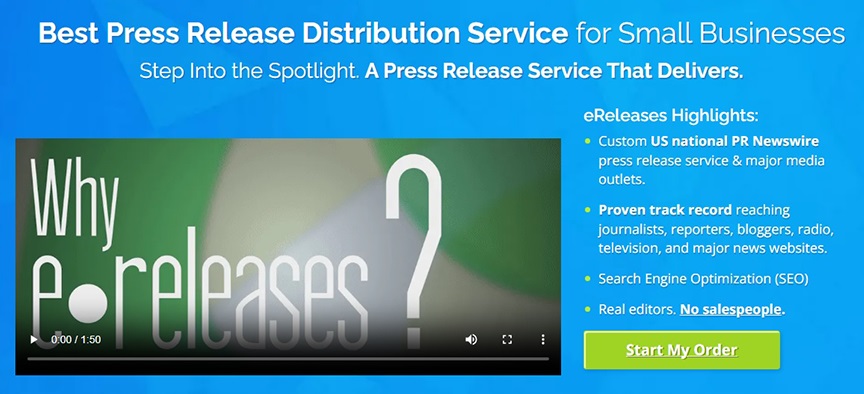
A press release distribution service sends your release through channels that syndicate to news sites, databases, and outlets. Some services include targeting options, editorial review, and reporting.
Pros of Distribution Services
- Broader reach fast: your announcement can appear across multiple platforms quickly.
- Credibility signal: reputable distribution can make your announcement feel more official and newsroom-friendly.
- Less manual work: you do not have to build a media list from scratch.
- Reporting: you often get a record of where the release appeared, which becomes a reusable credibility asset.
- Consistency: good services help you meet formatting and content standards that reduce mistakes.
Cons of Distribution Services
- Cost: quality distribution is an investment, and it is not always right for small announcements.
- No coverage guarantee: distribution is not the same as a journalist choosing to write a story.
- Broad does not always mean relevant: reach is not useful if it is not reaching the right audience.
Distribution services are best when you have a newsworthy announcement and you want a professional, scalable way to get it in front of the media ecosystem.
Pitching Journalists Directly: The Pros and Cons
Direct pitching means you contact specific journalists, editors, producers, bloggers, or newsletter writers with a tailored message about your news. This can be very effective, and it can also be deeply humbling.
Pros of Direct Pitching
- High relevance: you are targeting people who actually cover your niche.
- Potential for deeper coverage: a successful pitch can lead to interviews and feature stories.
- Relationship building: good outreach can create ongoing media connections.
- Lower direct cost: you might spend more time than money.
Cons of Direct Pitching
- Time-intensive: research, list building, personalization, and follow-up take real hours.
- Deliverability and inbox competition: reporters get swamped, your email may never be seen.
- Easy to do wrong: generic blasting can burn bridges and damage reputation.
- Hard to scale: it is tough to do consistently when you are also running a business.
Direct pitching is best when you have a strong, specific story and you can identify a small set of outlets where it is a perfect fit.
When Distribution Services Are Usually The Better Choice
Here are situations where distribution tends to outperform DIY pitching for small businesses.
You Need Broad Awareness
If you are launching a product, expanding, or announcing something that benefits from widespread visibility, distribution can create momentum quickly.
You Do Not Have Time To Build A Media List
Media list building is not glamorous. It is also not quick. If you do not have time to research, segment, and personalize, paying for distribution can be smarter than half-hearted outreach.
You Want A Credibility Trail
Even without a major feature, distribution can create a record of publication that you can use in marketing, proposals, partnership outreach, and investor materials.
Your Announcement Is Clear And Timely
Distribution works well for structured announcements with a clear date and outcome, like a grand opening, partnership, award, or milestone.
When Direct Pitching Is Usually The Better Choice
Direct pitching shines when the story is niche, nuanced, or best told through an interview.
You Have A Unique Story Angle
If your announcement has a human-interest angle, a strong founder story, or a trend connection, journalists may want to tell it in their own voice. That often comes from a pitch, not a wire post.
Your Audience Is Highly Specific
If you serve a specialized industry, you may be better off pitching a small number of trade outlets, niche newsletters, or podcasts that reach your exact buyers.
You Want A Feature, Not Just A Mention
Distribution can lead to pickup, but direct relationships and tailored pitches are more likely to produce deeper coverage.
The Hybrid Strategy Most Small Businesses Should Use
If you only remember one thing from this article, remember this: for many small businesses, the best answer is not either-or. It is both, used in the right order.
How The Hybrid Approach Works
- Write a strong press release that leads with clear news and includes proof points.
- Distribute it through a reputable service for broad reach and a credibility trail.
- Pitch 5 to 15 perfect-fit outlets with a short, personalized email that points to the release and offers an interview or additional details.
- Follow up once politely, then move on. Do not become the villain in someone’s inbox.
This strategy gives you distribution infrastructure and the precision of direct outreach. It also reduces the risk that your entire PR effort depends on one journalist opening one email at the right time.
What To Say In A Direct Pitch Email
Most pitch emails fail because they are too long, too vague, or too promotional. Keep it short and specific.
A Simple Pitch Structure
- Subject line: one clear news hook (location + outcome works well)
- Opening line: why you are contacting them specifically
- One-sentence news: what happened and why it matters
- Support: one or two proof points (numbers, impact, unique angle)
- Offer: interview availability, photos, data, customer story
- Link: to your press release or announcement page
If you want to add one extra ingredient, add relevance. Tie your story to something they have covered before. That is how you move from “random email” to “possible fit.”
How To Decide In 60 Seconds
Use this quick decision filter:
Choose Distribution If
- You want broad reach and a professional credibility trail
- You do not have time for deep outreach research
- Your news is straightforward and time-sensitive
- You value reporting and documented placements
Choose Direct Pitching If
- Your story is niche or best told through an interview
- You can name the exact outlets and writers who fit
- You are aiming for feature coverage, not just mentions
- You have time to personalize and follow up properly
Choose Hybrid If
- You want the best odds, and you have a meaningful announcement
- You want both reach and the chance at deeper coverage
- You are serious about using press as a long-term credibility strategy
Press is not about finding one perfect tactic. It is about stacking small advantages: clarity, distribution, relevance, and follow-through. When you combine a strong release with smart outreach, you turn PR from a mystery into a repeatable process.
Frequently Asked Questions
Is It Better To Use A Distribution Service Or Pitch Journalists?
It depends on your goal. Distribution is better for broad reach and a credibility trail, while pitching is better for targeted coverage and deeper stories. Many small businesses get the best results using a hybrid approach.
How Many Journalists Should A Small Business Pitch?
Start small. Pitch a short list of perfect-fit outlets, often 5 to 15, with personalized messages. Quality beats volume.
Do I Need A Press Release If I Am Pitching Directly?
Not always, but a well-written release can help by providing clean facts and a shareable summary. It also makes follow-up easier if a journalist wants details quickly.
What Is The Biggest Mistake With Direct Pitching?
Sending a generic mass email. It often gets ignored and can harm your reputation. Targeted, relevant, short pitches are more effective.