

Every product launch carries the same quiet anxiety: what if nobody shows up? You have spent months developing something you genuinely believe in, and the moment of release arrives with the vague, unsettling feeling that the market might simply shrug and move on. It happens more often than product creators like to admit, and it happens almost always for the same reason. The product was ready. The marketing was not.
Getting a new product noticed is a distinct skill from building the product itself, and the two rarely develop at the same pace in the same person. Founders and makers tend to invest their best energy in the thing being created, leaving the visibility question for the weeks before launch when the runway is short and the options have narrowed considerably. The businesses and entrepreneurs who consistently launch products that break through tend to treat the marketing work with the same seriousness and lead time as the product work, and that shift in priority changes outcomes dramatically.
What follows are the moves that actually make a difference, drawn from the pattern of launches that generate real attention rather than hopeful silence.
Contents
Start Building the Audience Before the Product Is Ready
The single most predictable difference between launches that generate momentum and those that fall flat is whether the business arrived at launch day with a warm audience or a cold one. A warm audience is a group of people who already know your name, have some relationship with your perspective or your previous work, and have given some form of explicit signal that they are interested in what you are building. A cold audience is everyone else, and converting cold into curious takes time that the final weeks before a launch rarely afford.
Building that audience before launch does not require finished product. It requires a compelling story about the problem being solved and the people it is being solved for. A coming-soon landing page that collects email addresses. Social content that documents the development process and invites people into the journey. A waitlist that creates both anticipation and a list to market to on day one. These activities feel premature when the product is not finished, and that is precisely when they are most valuable.
The Waitlist as a Signal and an Asset
A product waitlist does two things simultaneously. It creates a psychological signal of demand and scarcity that makes the product feel worth waiting for, and it builds a launch-day audience that you own outright, independent of any platform algorithm or advertising budget. Every name on that list represents someone who raised their hand and said they were interested. That kind of self-selected intent is worth more than orders of magnitude more passive impressions bought through paid channels, and it is something that virtually every pre-launch business has the tools to build.
Find and Activate Early Advocates
The most credible voices for a new product are never the ones employed by the company making it. They are the early users, beta testers, and preview recipients who formed a genuine opinion before having any commercial reason to share one. Identifying a small group of people whose opinions carry weight with your target audience and giving them early access in exchange for honest feedback and, where it is positive, public advocacy, is one of the most effective pre-launch investments a product creator can make.
These early advocates do not need to be celebrities or major influencers. In most product categories, a handful of credible peers, respected practitioners, or engaged community members with modest but highly relevant audiences will outperform a single splashy celebrity endorsement in terms of actual purchasing conversion. The person your prospective customer trusts most is usually someone who faces the same problems they do, not someone who was paid to hold your product in a photo.
Beta Access as a Marketing Tool
Structuring your beta or early access program with marketing outcomes in mind, rather than purely as a product testing exercise, extracts considerably more value from the same investment of product and time. Invite people who are active in your category, who write, post, or speak about topics adjacent to your product. Make their experience exceptional. Ask specifically for their feedback and, when that feedback is favorable, make it easy for them to share it publicly. A collection of authentic early reviews and testimonials is a launch asset that continues paying dividends long after the product ships.
Use the Launch Itself as a Media Event
A product launch is inherently newsworthy in a way that most ongoing business activity is not, and treating it as a media opportunity rather than simply a sales event extends its reach well beyond your existing audience. Journalists who cover your industry, niche bloggers, trade publication editors, and podcast hosts are all potential amplifiers of a story that is genuinely new, and the launch window is the most natural moment to approach them.
The discipline here is in framing. Reporters are not interested in covering your product launch because you are excited about it. They are interested if the launch represents a story their audience will care about: a solution to a problem that is widely recognized, an approach that challenges a prevailing assumption in the category, or a founder narrative with enough human interest to anchor a compelling feature. Translating your product launch into a story with that kind of external relevance is the work that separates launches that generate press from those that generate silence.
Press Releases Still Belong in the Launch Toolkit
Alongside direct journalist outreach, a formal press release distributed through a reliable wire service ensures that your launch announcement reaches the full breadth of the media landscape rather than just the contacts on your personal pitch list. Journalists at publications you have not yet developed relationships with, editors at trade outlets you may not have thought to approach, and reporters actively scanning newswires for stories in your category can all encounter your announcement through wire distribution in a way that targeted pitching alone cannot guarantee.
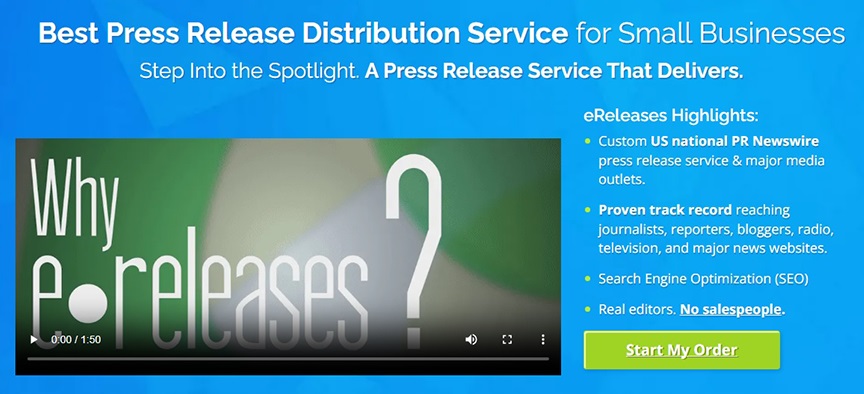
Services like eReleases provide national distribution through the PR Newswire wire network alongside targeted email delivery to a journalist database of more than 1.7 million contacts, at a price point that puts genuine wire-level reach within reach of independent product creators and small businesses. For a launch with real news value, that kind of distribution infrastructure is the difference between a story reaching the journalists most likely to act on it and a story that reaches only the ones you already knew to call.
Sequence Your Marketing Across the Launch Arc
One of the most common structural mistakes in product launches is treating launch day as the entire event rather than the midpoint of a longer arc. The marketing that happens in the weeks before launch, the day itself, and the weeks following each require distinct activities and serve distinct purposes, and treating them as a single undifferentiated burst of promotional activity wastes much of the available momentum.
The pre-launch phase builds awareness and anticipation. The launch day converts that anticipation into action and generates the initial wave of social proof that makes subsequent purchasing decisions easier. The post-launch phase extends momentum by amplifying reviews, sharing early customer stories, and continuing the conversation that the launch opened. Products that sustain attention beyond their first week tend to be the ones whose creators had a deliberate plan for all three phases rather than spending everything on the moment of release and going quiet immediately after.
Let Your First Customers Tell the Story
The post-launch period is when the most powerful marketing asset of all becomes available: real customers with real experiences. A new product with ten enthusiastic customers telling specific, genuine stories about how it changed something for them will outperform almost any brand-generated content in credibility and conversion impact. The work at this stage is to surface those stories systematically: ask for reviews, invite customers to share their experiences publicly, document case studies with their permission, and amplify the authentic voices that are already out there saying things about your product that you could not say about yourself.
Every product launch is a beginning, not a conclusion. The marketing that follows the initial release, if it is intentional and sustained, often matters more than the launch itself. The products that get noticed and stay noticed are the ones built by creators who understood that from the start.