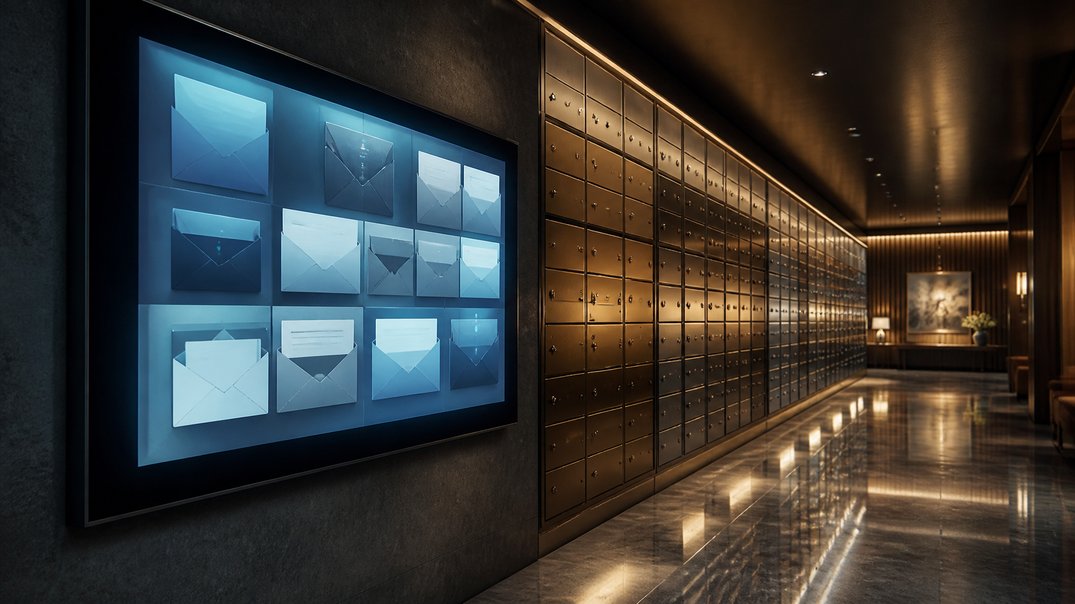
A virtual mailbox is a real street address where a provider receives your mail, then lets you manage it online. You can view photos of envelopes, request scans of the contents, forward items, or have them shredded, all from wherever you are. You sign USPS paperwork once, and the provider handles the rest.
What a Virtual Mailbox Is
A virtual mailbox is a mail receiving service. You get a street address, usually with a mailbox or suite number, and a provider accepts the letters and packages sent there. Instead of walking to a box, you manage your mail through an online account.
Providers of this kind operate as commercial mail receiving agencies, which the Postal Service regulates. Each customer completes USPS Form 1583, which authorizes the provider to receive mail on your behalf. That paperwork is what separates a legitimate virtual mailbox from simply borrowing someone else’s address.
For senders, nothing looks unusual. Your mail arrives at a normal street address, and the provider’s staff receives it, logs it, and posts a notice to your account. The process runs in the background, so you rarely think about it once you are set up.
How a Virtual Mailbox Works Step by Step
The process is simple once you are set up. Set aside a few minutes for the signing step, and have your IDs ready so things move along. Here is how it usually goes:
- Choose a provider and a mailbox location that fits your needs
- Complete USPS Form 1583 with two types of ID and a witnessed or notarized signature
- Start using your new address for mail and, where accepted, for business
- Receive a notification when mail arrives
- Choose what happens to each item: scan, forward, hold, or shred
Many providers send a photo of the envelope first, so you can tell important mail from junk before you decide. You can then ask for the contents to be scanned, have the item forwarded, or have it shredded or recycled. The form notes that items re-mailed through the postal system need new postage, which is why forwarding usually carries a fee.

Who Uses a Virtual Mailbox
People use virtual mailboxes for different reasons. Freelancers and solo business owners want a professional address that is not their home. Remote workers and digital nomads want a steady address while they move. Expats want a U.S. address while they live abroad. Home-based owners want privacy, and small businesses with occasional mail like the flexibility of handling it from anywhere.
What they share is a wish to separate where they live from where mail goes. A mailbox does that without a lease, a storefront, or a trip to the post office. The common thread is flexibility. A mailbox suits people whose lives or businesses do not stay in one place, and it suits people who simply prefer to keep their home address private.
What to Know Before You Sign Up
Features and fees vary from one provider to the next, so compare before you commit. Ask about package acceptance, storage limits, how long mail is held, scanning and forwarding fees, and cancellation terms. If you run a business, ask whether the provider offers extras such as registered agent service, which is usually a separate product. Check how quickly the provider posts new mail and how it notifies you, since fast, reliable alerts make the service far more useful. Ask support a question before you buy to see how responsive the team is.
Remember what a virtual mailbox is not. It is not a residence, and some agencies and platforms want a physical address instead. Use it honestly and confirm the rules for each situation. This article is general information, not legal advice. Choose carefully, and your mailbox can simplify your life.
Virtual Mailbox Basics FAQs
Is a Virtual Mailbox the Same as a P.O. Box?
No. A virtual mailbox address is typically a street address with a mailbox number, and the provider manages your mail remotely.
Do I Need to Sign Anything to Get One?
Yes. You complete USPS Form 1583, which requires two types of ID and a signature given in front of the provider or a notary.
Can I Receive Packages at a Virtual Mailbox?
Many providers accept packages, but carriers, sizes, and fees vary. Ask before you rely on it.