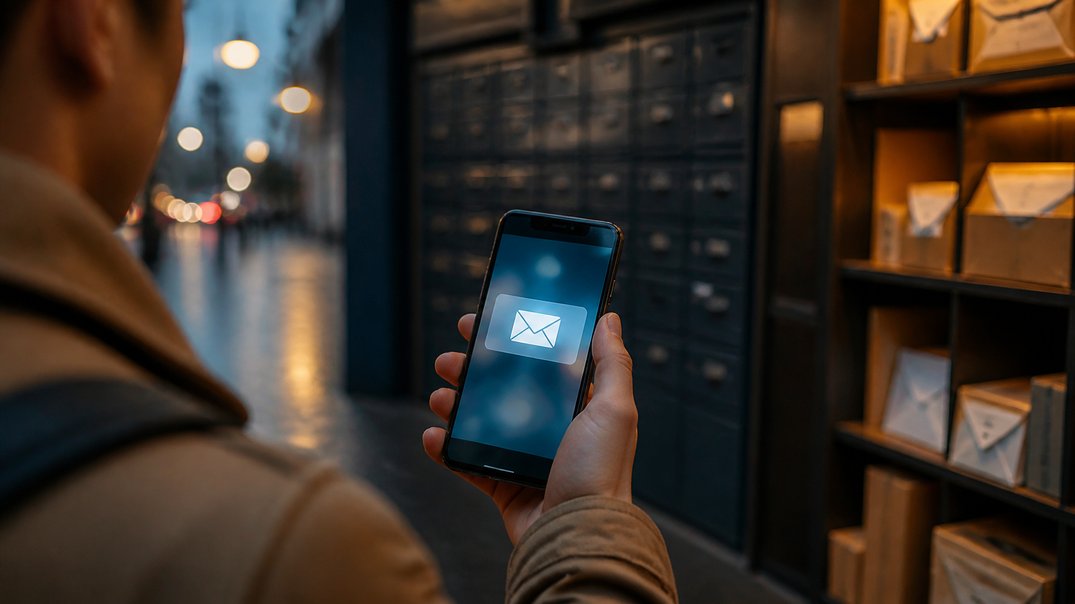
Your provider receives and logs it, then posts a notice to your online account, often with a photo of the envelope. You choose what happens next: scan the contents, forward the item, hold it, or shred it. Most providers open mail only when you ask, so confirm that policy before you sign up.
The Journey of a Letter, Step by Step
Here is the usual path from the delivery truck to your screen:
- The carrier delivers your mail to the provider’s street address
- Staff members log each item and photograph the outside of the envelope
- You receive a notification, often by email or app alert
- You review the photo and choose an action for each item
- The provider carries out your choice and updates your account
The details differ from one provider to another, but the sequence is familiar. The provider acts as your agent for mail, which is what USPS Form 1583 authorizes, so every item addressed to you passes through this same process.
Speed varies, too. Some providers post a notification within a day of delivery, while others take longer during busy periods. Ask about typical turnaround times so you know what to expect.
Your Options for Each Item
Once you see an envelope, you decide what happens to it. Scanning is ideal for statements and notices: the provider opens the item and sends you a digital copy you can read anywhere. Forwarding sends the physical item to an address you choose, and the USPS form says re-mailed items must carry new postage, so expect a shipping fee.
Holding keeps the item at the mailbox until you decide. Shredding or recycling takes care of junk mail and old notices so you do not pay to ship things you do not want. Providers differ on which of these options are included and which cost extra, so check the price list before you rely on any of them. Think about timing as well. A scan request may take a day or more to complete, and forwarding adds shipping time on top of that. For urgent items, ask whether your provider offers faster handling.

Privacy and Security Questions to Ask
Mail is personal, so ask how your provider treats it. Does staff open mail only at your request? Who can see your scanned documents, and how long are scans stored? How are items destroyed when you ask for shredding? A good provider answers these questions plainly. Choose a company that is open about its practices, since clear answers before you sign up usually predict clear communication afterward.
The Postal Service sets its own guardrails. The form’s privacy statement says USPS uses your information to verify your identity and make sure mail reaches the correct recipient, and the form requires identification for anyone you authorize to collect your mail. Providers keep a signed copy of your form on site and upload the original to a USPS database.
Tips for Staying on Top of Your Mail
A little routine keeps everything under control. Turn on notifications so new mail never sits unnoticed. Set a regular time each week to review your account, and act first on anything with a deadline, such as tax notices, legal letters, and bills. Ask for scans of important items right away, and save them in your own records.
Handle junk quickly, too. If a sender keeps mailing you something you do not need, ask your provider about shredding it as a standing choice, or contact the sender to be removed from the list. Over time, you will see less clutter and more of the mail that matters. Finally, keep your address current with every sender. Mail that is misaddressed, such as one missing your mailbox number, can be delayed or returned.
Mail Arrival at a Virtual Mailbox FAQs
Does Anyone Open My Mail?
Policies vary. Most providers open mail only at your request, but confirm that in your provider’s terms. Ask whether the policy is the same for packages.
What Happens to Mail I Ignore?
It depends on the provider’s retention policy. Ask how long items are held and what happens afterward, whether that means shredding, returning, or storage fees.
Can Someone Else Collect My Mail?
Yes, if you list an authorized individual on USPS Form 1583. That person must also show two types of ID.