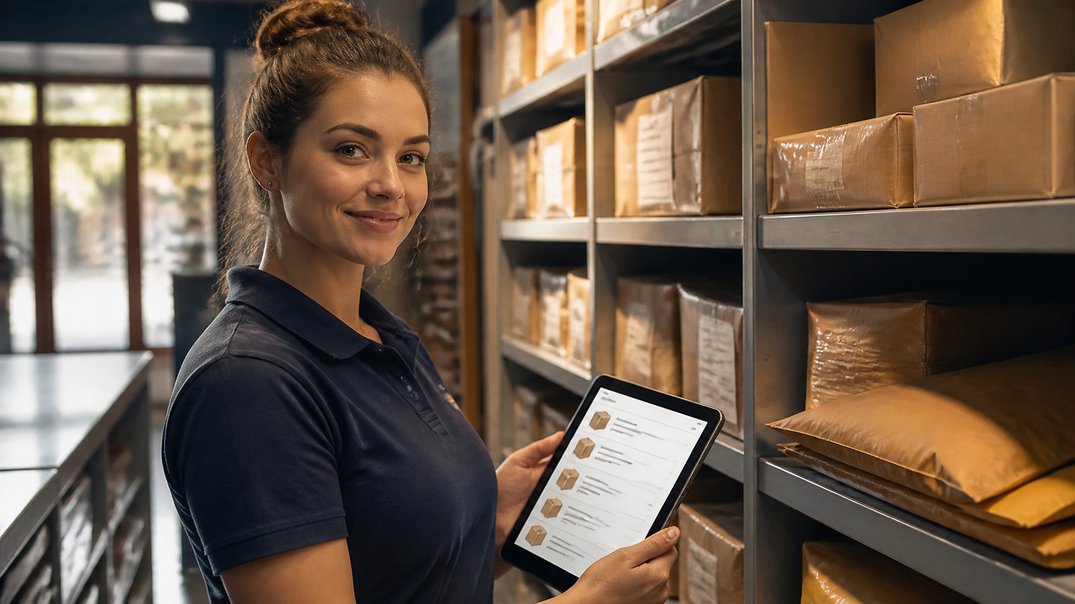
Often yes. Many virtual mailbox providers accept packages from major carriers and hold them until you decide to pick them up or have them forwarded. Carrier acceptance, size limits, storage time, and fees vary, so ask your provider before you rely on it for important shipments.
Why Packages Are Different From Letters
Letters are easy for a provider to handle. They are flat, light, and can be scanned and shredded. Packages take up shelf space, need to be logged carefully, and often cost more to store and ship, which is why providers treat them differently from envelopes.
A virtual mailbox address is a street address, which helps. Carriers deliver to street addresses easily, while private carriers often cannot deliver to a P.O. box. Even so, acceptance varies by provider and by carrier, so confirm the details rather than assuming every shipment will be accepted. The practical takeaway is to treat package service as a feature to verify, not a given. A quick check before your first order can save you from a returned shipment or an unexpected fee.
Questions to Ask Your Provider About Packages
Ask these questions before you order anything important:
- Which carriers do you accept, and are there any exceptions?
- What are your size and weight limits?
- How long can a package sit before storage fees apply?
- What do you charge to receive, store, or forward packages?
- Will you notify me the moment a package arrives?
- Can you sign for deliveries that require a signature?
Write down the answers and save them with your account details. If a provider is vague about any of these points, treat that as a reason to look at other options. It also helps to ask how the provider handles a delivery attempt when no one can accept a package. Reliable answers there show how well the provider manages shipments in general.

Forwarding and Picking Up Your Packages
Once a package arrives, you usually have two choices: forward it or pick it up. Forwarding costs money, because USPS Form 1583 says items re-mailed through the postal system must carry new postage. Ask whether your provider ships through USPS or private carriers, how it calculates rates, and whether it can combine several packages into one shipment. Combining can save money, so it is worth asking about, especially if you order often.
If you live nearby, you may be able to pick packages up in person. Check the provider’s hours and ID requirements first. You can also name an authorized individual on the form, and that person must show two types of ID, so plan ahead before you send a friend or assistant to collect something for you.
International forwarding adds extra questions. Customs rules, duties, and delivery times differ by country, and some items are restricted, so check your destination’s rules before you ship valuables or electronics.
Tips for Shoppers and Online Sellers
Enter your address exactly as your provider formats it, including the mailbox or suite number. A missing number can send your package to the wrong place or delay it. Use tracking for anything valuable, and watch your account for arrival notices. If a package seems late, share the tracking number with your provider’s support team, since staff may be able to check whether it was received. When you order gifts or time-sensitive items, allow extra days for the package to arrive, be logged, and be forwarded.
Online sellers can use a mailbox for returns and supplier shipments, which keeps customer traffic away from home. Check each marketplace’s address rules first, since some ask for a home or legal business address for verification. Used thoughtfully, a mailbox makes packages one less thing to juggle.
Virtual Mailbox Package FAQs
Can I Get Packages From Amazon, UPS, and FedEx?
Many providers accept deliveries from major carriers, but acceptance varies. Confirm your provider’s list before you order.
What Is the Size Limit for Packages?
Limits vary by provider and often depend on storage space. Ask about maximum size and weight before you order large items.
How Do I Get a Package Sent to Me?
Ask your provider to forward it. The USPS form says mail re-sent through the postal system needs new postage, so expect a shipping charge.