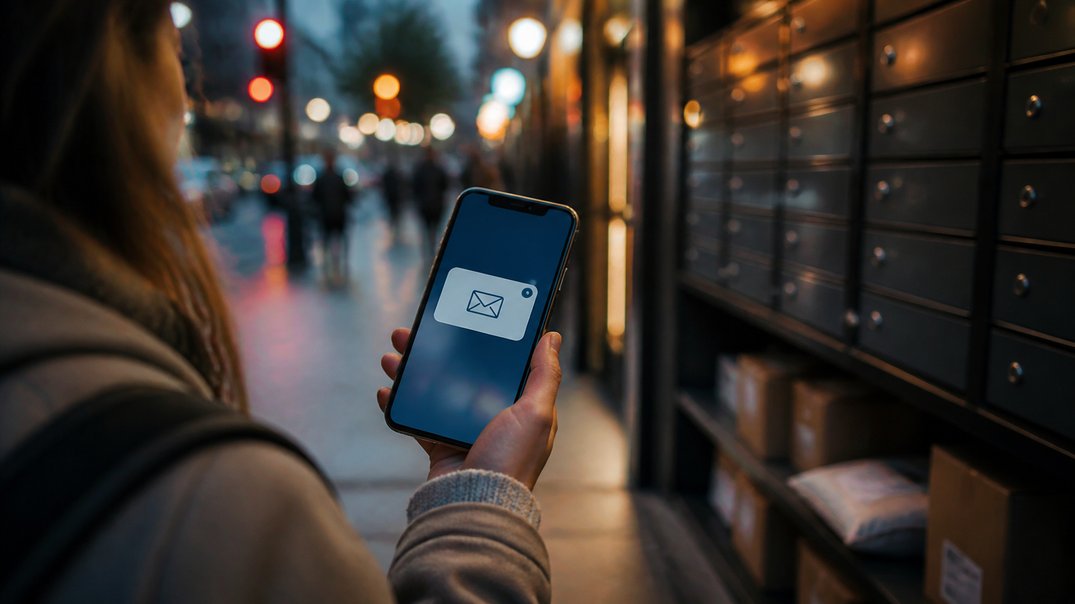
It gives your business its own address and its own stream of mail, so your home address stays private and your business correspondence never mixes with personal letters. Combined with a business bank account and clear records, a mailbox helps you draw a clean line between work and home.
Why Separation Matters
Mixing business and personal life creates friction. Business mail lands on your kitchen table, client letters sit next to utility bills, and your home address ends up on documents that strangers can read. Separation fixes all three, and it makes your records easier to manage. It helps your head, too. When business mail lives in its own place, you can leave work at the end of the day instead of tripping over it at home.
The U.S. Small Business Administration points to the same idea on the money side. It says a business bank account keeps your business funds separate from your personal funds, which offers limited personal liability protection, and that it lets customers write checks to your business instead of to you personally. A virtual mailbox applies that logic to your address and your mail.
How a Virtual Mailbox Creates a Boundary
A virtual mailbox gives your business its own street address. You use it on your website, invoices, contracts, and vendor accounts, so your home address stays off them. Mail for the business goes to the provider, not to your front door, and you handle it on your schedule through an online account. You decide when to deal with it. Instead of opening envelopes at the dinner table, you review the day’s arrivals during work hours and let the rest wait.
Your home address does not vanish from the picture, since USPS Form 1583 requires it, along with a document that confirms it, and the provider keeps your signed form on file. The form’s privacy statement says USPS may disclose that an address belongs to a mail agent, but it does not authorize disclosing the identities of the people the agent receives mail for. That limits what the address itself reveals about you.

Building the Rest of the Boundary
A mailbox is one tool of several. Pair it with these separators:
- A business bank account for all business income and spending
- A business email address and, if you like, a separate phone number
- A business name used consistently on invoices, your website, and profiles
- A dedicated workspace or folder system for business documents
- A calendar routine for reviewing business mail and paperwork
Business structure matters too. The SBA notes that a sole proprietorship does not create a separate business entity, so your business and personal assets and liabilities are not separate, while an LLC can protect your personal assets in most instances. A professional can help you decide which structure fits your situation.
Habits That Keep the Line Clear
Habits make the boundary stick. Check your business mail at set times, perhaps once or twice a week, instead of letting it interrupt your day. Pay business expenses from the business account and personal expenses from your personal accounts. When a bill arrives, put it in the right pile immediately. Consider a short end-of-week routine as well: review new mail, file your scans, and note any deadlines for the coming week.
Share your business address by default and your home address only when someone truly needs it. Review your websites and profiles every few months to catch any place where your home address crept back in. This article is general information, not legal or tax advice, so check with a professional about your structure. Small, steady routines turn separation from an idea into a way of working.
Business and Personal Separation FAQs
Does a Virtual Mailbox Separate My Finances?
Not by itself. A business bank account does that. The mailbox separates your business address and your mail from your home.
Do I Need an LLC to Separate Business and Personal Life?
Not necessarily. The SBA notes that a sole proprietorship does not create a separate legal entity. Ask a professional which structure fits your situation.
Can I Use the Mailbox for Personal Mail Too?
Possibly. The USPS form asks you to choose business or personal use, and personal use calls for a separate form for each adult. Ask your provider how it handles mixed use.